
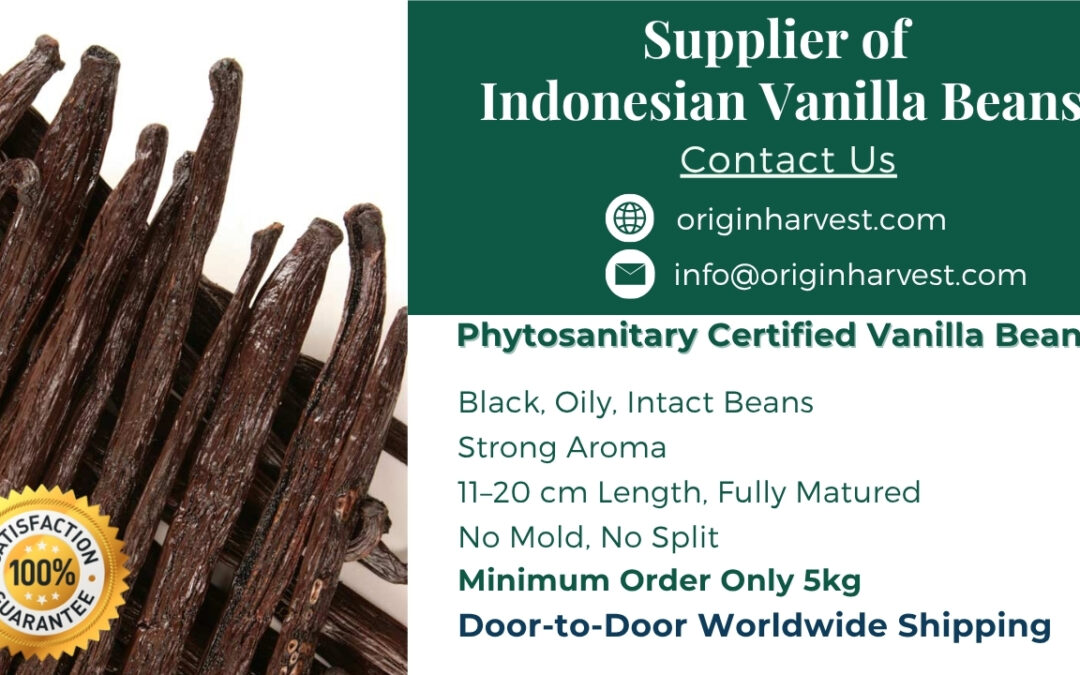
The world needs more reliable Tahitian vanilla bean suppliers. As one of the most exclusive spices in the world, vanilla comes in several distinct varieties, each with its own characteristics, aroma, and flavor profile. The role of a Tahitian vanilla bean supplier is to ensure consistent availability of this rare product, helping maintain balance in a global vanilla industry that continues to grow.
This exclusive variety fascinates anyone who is familiar with the vanilla plant. It possesses a number of unique qualities that simply cannot be found in other types. Ironically, Tahitian vanilla accounts for only about 1 percent of global vanilla production. Its limited supply makes it both exclusive and expensive, which is precisely why a dedicated Tahitian vanilla bean supplier plays such a critical role. They are the link between this rare plant and the industries that depend on it.
Contents
- 1 Tahitian Vanilla Bean Supplier and Its Limited Stock
- 2 What Makes Tahitian Vanilla Unique
- 3 Tahitian vs. Madagascar Vanilla: Key Differences
- 4 Tahitian Vanilla Bean Supplier in the Industry
- 5 Benefits of Collaborating with a Tahitian Vanilla Bean Supplier
- 6 Frequently Asked Questions About Tahitian Vanilla Bean Supplier
- 6.1 What makes Tahitian vanilla different from regular vanilla?
- 6.2 Where is Tahitian vanilla grown?
- 6.3 Why is Tahitian vanilla so rare and expensive?
- 6.4 What is the best way to use Tahitian vanilla beans in cooking?
- 6.5 Can Tahitian vanilla be used in beauty and personal care products?
- 6.6 How do I verify the authenticity of Tahitian vanilla beans from a supplier?
Tahitian Vanilla Bean Supplier and Its Limited Stock
Tahitian vanilla cultivation follows the same fundamental process as other vanilla varieties, but with the same intensive demands: hand-pollination of every flower within its single day of bloom, careful harvesting, and a lengthy curing process that can take several months. The plant first became established on the island of Tahiti in French Polynesia, which is also the source of its name.
The island of Tahiti is famous for its natural beauty, including its lush green tropical landscapes. Over time, growers found that Tahitian vanilla could also thrive in other tropical regions that replicate its ideal growing conditions. Research has consistently shown that warm temperatures, high humidity, and fertile tropical soil are the key environmental requirements for this plant.
The low percentage of global production combined with these specific growing requirements makes a reliable Tahitian vanilla bean supplier increasingly rare. Stock tends to deplete faster than it can be replenished, creating high and sustained demand for this remarkable natural product. Fortunately, suppliers can now source Tahitian vanilla from regions outside French Polynesia, such as Papua New Guinea and Indonesia, without sacrificing the quality that distinguishes this variety.
What Makes Tahitian Vanilla Unique
Many buyers compare Tahitian vanilla with Madagascar vanilla. A knowledgeable Tahitian vanilla bean supplier will always point out that both types have strong and distinct characteristics, and that those who are not experienced vanilla buyers may find it difficult to differentiate them at first. A closer look at their chemistry and flavor profiles reveals clear differences.
Madagascar vanilla, which is a variety of Vanilla planifolia, contains high levels of vanillin, the primary compound responsible for the deep, rich, and creamy classic vanilla flavor. Tahitian vanilla, which comes from the species Vanilla tahitensis, contains lower vanillin levels but compensates with a higher concentration of other aromatic compounds including heliotropin (piperonal), anisaldehyde, and anisyl esters. These compounds give Tahitian vanilla its signature floral, fruity, and cherry-like aroma profile that is distinctly different from planifolia.
Coumarin is also present in Tahitian vanilla and contributes to its overall aromatic character, adding a subtle sweet and hay-like nuance. This combination of aromatic compounds produces a flavor that is more perfumed and complex than the straightforward warmth of planifolia. It is why many perfumers and gourmet chefs prefer Tahitian vanilla when they want a more nuanced and elegant vanilla character rather than a bold, dominant one.
Another fascinating aspect of Tahitian vanilla is its botanical history. Vanilla tahitensis is believed to be a hybrid of Vanilla planifolia and Vanilla odorata, with its origins tracing back through the vanilla cultivation history of Mesoamerica. To understand more about how vanilla cultivation spread globally, our article on vanilla bean history provides a detailed account.
Tahitian vs. Madagascar Vanilla: Key Differences
| Feature | Tahitian Vanilla (V. tahitensis) | Madagascar Vanilla (V. planifolia) |
|---|---|---|
| Species | Hybrid of planifolia and odorata | Vanilla planifolia |
| Vanillin Content | Lower (0.5 to 1.5%) | Higher (1.6 to 2.4%) |
| Key Aroma Compounds | Heliotropin, anisaldehyde, coumarin | Vanillin, vanillic acid, guaiacol |
| Flavor Profile | Floral, fruity, cherry, anise | Rich, creamy, sweet, slightly chocolatey |
| Pod Appearance | Shorter, plumper, more moist | Longer, slender, dark and oily |
| Best Applications | Custards, perfumery, fruit desserts, cocktails | Baking, ice cream, extract, chocolate |
| Global Production Share | Approximately 1% of global supply | Approximately 80% of global supply |
Tahitian Vanilla Bean Supplier in the Industry
Vanilla plants, like others in the orchid family, serve various industries, with food and beverage remaining the primary sector due to the remarkable and irreplaceable flavor vanilla provides. This has been the case for centuries. Below are some of the key uses of high-quality Tahitian vanilla that a knowledgeable Tahitian vanilla bean supplier can help you access.
Snacks and Confectionery
Vanilla flavor is a staple in the snack and confectionery category. While it may not always be the primary flavor on the label, adding Tahitian vanilla enhances the overall sensory experience of snacks, candies, and sweet treats, making them more layered and enjoyable. Its floral notes work particularly well in lighter, fruit-forward confectionery products.
Beverages
Many cafes and restaurants incorporate vanilla as a key flavoring ingredient in their beverage menus. Tahitian vanilla works beautifully in a wide variety of drinks, from smoothies and milkshakes to hot chocolate, lattes, frappuccinos, cocktails, and gourmet syrups. Its floral and fruity character adds complexity to beverages without overpowering other flavors, making it a preferred choice for specialty drink developers.
Desserts and Custards
Vanilla is a central ingredient in the dessert industry, and Tahitian vanilla is especially prized in this space. Its floral, fruity, and cherry-like aroma makes it the preferred variety for delicate preparations such as panna cotta, custards, ice cream, fruit tarts, and whipped cream. For a broader look at how vanilla beans can be used across different dessert types, our guide on vanilla bean desserts is a useful reference.
Baked Goods
Baking experts and pastry chefs have long relied on vanilla to elevate a wide range of baked goods. Tahitian vanilla’s aromatic complexity adds a distinctive dimension to cakes, cookies, and pastry creams that goes beyond what standard planifolia extract delivers. It blends well with butter, cream, and fruit-based ingredients, creating a richer and more memorable flavor in finished baked goods.
Beauty and Personal Care Products
Vanilla is also a sought-after raw material in the beauty industry, used in products such as shampoo, soap, body lotion, facial cleanser, and perfume. The vanilla scent in personal care products provides a nuanced, warm, and comforting fragrance. Tahitian vanilla in particular is valued in perfumery for its floral complexity and depth, making it well-suited to feminine fragrance compositions. Vanilla also has well-documented calming properties, and its use in aromatherapy-inspired products continues to grow as consumers seek sensory wellbeing in their daily routines.
Benefits of Collaborating with a Tahitian Vanilla Bean Supplier
Finding reliable suppliers for rare products can be genuinely challenging. While standard planifolia vanilla is relatively accessible, Tahitian vanilla is significantly rarer and requires a supplier with specific sourcing expertise. By working with a dedicated Tahitian vanilla bean supplier, you gain access to exclusive, high-quality vanilla that meets the standards demanded by gourmet food production, specialty cosmetics, and fine fragrance applications.
Some suppliers also source Tahitian vanilla from tropical countries like Indonesia and Papua New Guinea, where successful cultivation of this variety has been established. These sources can provide consistent supply at competitive prices without compromising on the distinctive aromatic qualities that make Tahitian vanilla unique.
At Origin Harvest, we address the scarcity of Tahitian vanilla by providing reliable and consistent access to this premium product. As a trusted Tahitian vanilla bean supplier based in Indonesia, we offer a wide range of vanilla products in various forms, all meeting international standards through strict quality control at every stage from farm to shipment.
We believe in sustainable partnerships and work directly with local farmers who cultivate our vanilla with care and expertise. With competitive pricing, phytosanitary-certified products, and a minimum order of just 5 kilograms, we are ready to support your business at any scale. Partner with Origin Harvest, your reliable Tahitian vanilla bean supplier.
Frequently Asked Questions About Tahitian Vanilla Bean Supplier
What makes Tahitian vanilla different from regular vanilla?
Tahitian vanilla comes from the species Vanilla tahitensis, which is a natural hybrid believed to be a cross between Vanilla planifolia and Vanilla odorata. Unlike regular planifolia vanilla, which has a high vanillin content and a deep, creamy, classic vanilla flavor, Tahitian vanilla has lower vanillin levels but a richer concentration of other aromatic compounds including heliotropin, anisaldehyde, and coumarin. These compounds give it a distinctly floral, fruity, and slightly cherry-like aroma that is more complex and perfumed than standard vanilla. This makes it particularly valued in gourmet culinary applications and high-end perfumery.
Where is Tahitian vanilla grown?
Tahitian vanilla is primarily grown in French Polynesia, particularly on the islands of Tahiti and the Marquesas, which is the origin of its name. It is also successfully cultivated in Papua New Guinea, which has become one of the most significant producers of Tahitian vanilla outside French Polynesia. Indonesia has also established Tahitian vanilla cultivation in suitable tropical regions. All of these locations share the warm, humid, and tropical climate conditions that Vanilla tahitensis requires to thrive and develop its signature aroma profile.
Why is Tahitian vanilla so rare and expensive?
Tahitian vanilla accounts for approximately just 1 percent of global vanilla production, which makes it inherently scarce. Its cultivation is geographically limited to tropical regions with very specific climate conditions. Like all commercial vanilla varieties, every Tahitian vanilla flower must be hand-pollinated within its single day of blooming, making large-scale production labor-intensive and unpredictable. The resulting pods then require several months of careful curing before they develop their full aroma. This combination of geographical limitations, intensive labor, and low production volume results in a consistently higher price compared to more widely available planifolia varieties.
What is the best way to use Tahitian vanilla beans in cooking?
Tahitian vanilla beans are best used in preparations where their floral and fruity aroma can take center stage rather than being overwhelmed by strong competing flavors. Split the pod lengthwise with a sharp knife, scrape out the seeds, and add them directly to custards, ice cream bases, panna cotta, whipped cream, or fruit-based desserts. The empty pod can be steeped in warm milk, cream, or simple syrup to infuse additional flavor. Tahitian vanilla also works exceptionally well in cocktails, flavored syrups, and light sauces where a delicate vanilla character is preferred over a bold one. Avoid using Tahitian vanilla in heavily spiced or strongly flavored baked goods where its nuanced profile would be lost.
Can Tahitian vanilla be used in beauty and personal care products?
Yes, Tahitian vanilla is highly valued in the cosmetics and personal care industry, particularly in perfumery. Its floral, fruity, and slightly anise-like aroma adds a sophisticated and feminine character to fragrance compositions. Vanilla extract and vanilla-infused carrier oils made from Tahitian pods are used in soaps, body lotions, shampoos, and facial care products. The calming sensory properties associated with vanilla fragrance have made it a popular choice in wellness-oriented personal care lines. For producers of natural beauty products, sourcing Tahitian vanilla from a reliable supplier ensures consistent quality and authenticity in the finished product.
How do I verify the authenticity of Tahitian vanilla beans from a supplier?
Authentic Tahitian vanilla beans should be plump, moist, and have a distinctly floral, fruity aroma that is noticeably different from the creamy, warm scent of planifolia. They are typically shorter and broader than Madagascar planifolia beans. When purchasing wholesale, always ask your supplier for documentation including the country of origin, a phytosanitary certificate issued by the relevant agricultural authority, and if available, a species confirmation. Be cautious of suppliers selling very inexpensive “Tahitian vanilla” that smells primarily of standard vanilla, as this may indicate planifolia being sold under the Tahitian label. Origin Harvest provides full documentation and grade transparency with every order.
Reviewed and updated by the Origin Harvest Editorial Team on May 3, 2026. This article covers what makes Tahitian vanilla a rare and exclusive variety, how it differs from Madagascar planifolia in flavor compounds and applications, and how to find a reliable Tahitian vanilla bean supplier. Content is prepared to provide accurate and practical information for culinary professionals, food manufacturers, and vanilla enthusiasts sourcing premium vanilla beans from Indonesia.