
Desserts today are not just a final course in famous restaurants. They are also the snacks people reach for when rushing through a deadline, a comfort when emotions run low, and a popular target for digital content creators looking for visually stunning culinary subjects. One of the flavors that leaves the longest impression is vanilla, and vanilla bean desserts in any form, whether ice cream, mousse, pudding, soft cake, or candy, complement an entire meal beautifully from start to finish.
You may remember the soup you had with bread as an appetizer. You will remember the thick and juicy meat of the main course. But the memory of a soft, fragrant vanilla dessert tends to stay the longest. Dessert can be the very reason people want to come back to a restaurant. So, can we make our own vanilla bean desserts at home? Absolutely, and more easily than most people think.
Contents
- 1 Why Vanilla Beans Make the Best Desserts
- 2 Vanilla Bean Desserts with Quick Mousse
- 3 Vanilla Bean Comparison for Dessert Use
- 4 Vanilla Bean Desserts from the Pod Itself
- 5 Vanilla Bean Ice Cream for Breakfast
- 6 More Vanilla Bean Dessert Ideas to Explore
- 7 Frequently Asked Questions About Vanilla Bean Desserts
- 7.1 Can I use vanilla bean paste instead of whole vanilla beans in desserts?
- 7.2 What is the difference between using vanilla extract and vanilla beans in desserts?
- 7.3 How long should vanilla mousse be refrigerated before serving?
- 7.4 Is it safe to use raw egg whites in vanilla mousse?
- 7.5 Which vanilla variety is best for ice cream?
- 7.6 Can I make vanilla bean desserts with spent vanilla pods?
Why Vanilla Beans Make the Best Desserts
Not all vanilla is created equal. Using real vanilla beans in your desserts, rather than synthetic vanilla flavoring, makes a significant difference in depth, aroma, and overall quality. Real vanilla beans contain over 250 natural flavor compounds, which give desserts a richness and complexity that no artificial substitute can replicate.
The two most popular varieties for dessert use are Vanilla planifolia, which delivers a deep, creamy, and slightly chocolatey flavor, and Vanilla tahitensis (Tahitian vanilla), which offers a lighter, more floral and fruity character. Both are excellent choices depending on the type of dessert you are making. You can learn more about the differences between these two in our guide on vanilla bean flavoring.
Vanilla Bean Desserts with Quick Mousse
One day you may have guests coming over, whether to celebrate a promotion, a housewarming, or a simple birthday gathering. You do not need to order vanilla bean desserts from a restaurant. You can make one yourself quickly using a mousse prepared with real vanilla beans.
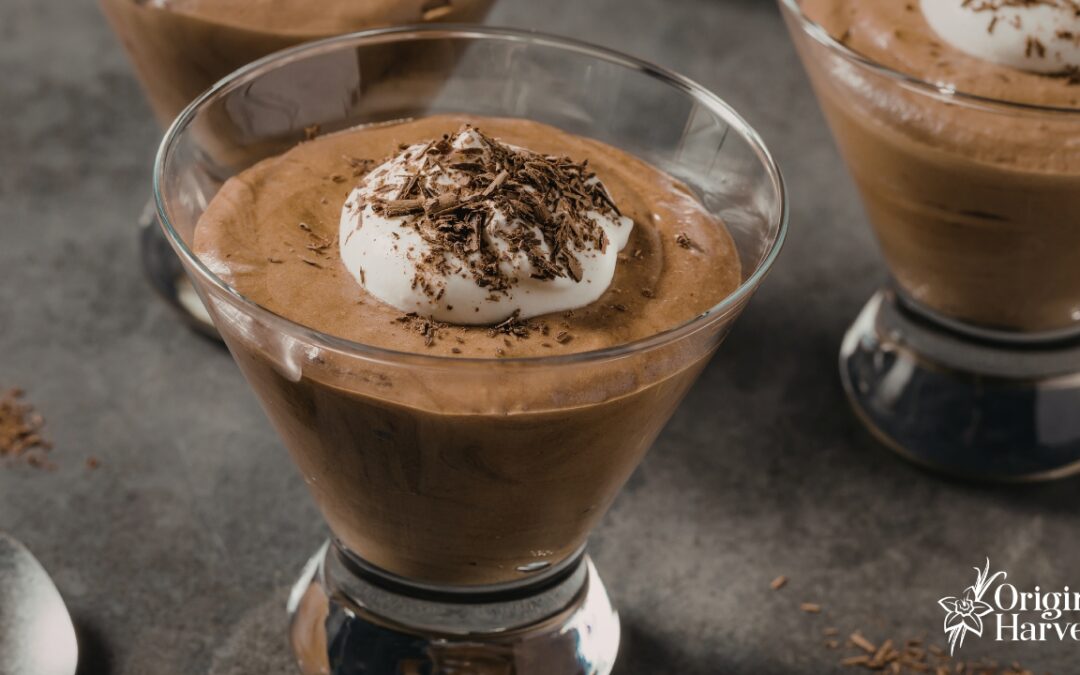
You can call it vanilla mousse, soft vanilla mousse, or vanilla mousse in a cup. In simple terms, it is a smooth, airy mixture of vanilla custard or pudding combined with whipped heavy cream, fruit toppings, and white or dark chocolate shavings. It is a dessert that saves time and keeps costs reasonable without sacrificing elegance.
How to Make Vanilla Mousse at Home
You can make vanilla mousse from scratch using simple ingredients: egg whites, granulated sugar, heavy cream, and one or two vanilla beans. Split the beans lengthwise and scrape out the seeds using a small knife. The type of vanilla you use can be either Vanilla planifolia or Tahitian, both of which bring a distinctive strong yet soothing aroma that works beautifully in this dessert.
Alternatively, you can use instant vanilla pudding as the base and stir in real vanilla bean seeds or a few drops of natural vanilla bean extract to elevate the flavor. This shortcut saves considerable time without a major sacrifice in quality.
Here is a straightforward method for making vanilla mousse:
- Beat the heavy cream together with the vanilla bean seeds and sugar until the mixture forms soft peaks. Do not over-beat at this stage. Set the whipped cream aside.
- In a separate bowl, beat the egg whites until foamy. Then add sugar gradually and continue beating until stiff peaks form.
- Gently fold the whipped cream mixture into the beaten egg whites using a spatula, working in slow circular motions to preserve the airiness of the mousse.
- Spoon the mixture into individual serving cups or glasses, then refrigerate for at least 6 hours, or overnight, before serving.
Top with fresh fruit, a drizzle of fruit coulis, or finely shaved chocolate before serving. The result is a light, elegant vanilla bean dessert that can be prepared hours in advance, making it ideal for entertaining.
How to Make Vanilla Mousse at Home
Watch the video below for a visual guide on making vanilla bean mousse using an anglaise base, then follow the written steps.
Vanilla Bean Comparison for Dessert Use
| Vanilla Type | Flavor Profile | Best Dessert Pairings | Recommended Form |
|---|---|---|---|
| Vanilla Planifolia | Rich, creamy, slightly chocolatey | Ice cream, cakes, cookies, custard | Seeds, extract, paste |
| Vanilla Tahitensis (Tahitian) | Floral, fruity, lighter | Mousse, panna cotta, cocktails, sorbet | Seeds, extract, infusion |
| Vanilla Extract (natural) | Concentrated, warm, complex | Baked goods, sauces, beverages | A few drops per recipe |
| Spent Vanilla Pods | Subtle, aromatic | Infused milk, vanilla sugar, syrup | Steep in liquid or sugar |
Vanilla Bean Desserts from the Pod Itself
Most home cooks scrape out the seeds from a vanilla bean and then discard the outer pod. But a skilled chef knows that the pod itself still holds value even after the seeds have been removed. The remaining pod retains a strong vanilla aroma and can be the main ingredient in several additional vanilla bean desserts and flavor infusions.
After you have finished scraping each vanilla planifolia or Tahitian bean, set the spent pods aside. You can place them in jars with a mix of salt and sugar to create a fragrant vanilla salt or vanilla sugar. This adds a subtle sweet flavor and soft aroma to both. The pods can then be used to infuse milk for ice cream, steep in alcohol to make a secondary vanilla extract, blend into vanilla coffee, or simmer with maple syrup to create a vanilla-infused pancake topping.
To understand more about the fascinating origins of the vanilla plant and why it is one of the most labor-intensive spices in the world, take a look at our article on vanilla bean history.
Vanilla Bean Ice Cream for Breakfast
You might wonder whether vanilla bean ice cream can work as a breakfast option. Making ice cream in the morning may sound unusual, but a blend of vanilla beans, fresh milk, and frozen fruit can make it not only possible but genuinely nutritious. The key is preparation the night before.
Freeze bananas or avocados the evening before. The next morning, blend the frozen fruit together with vanilla bean seeds or a small amount of natural vanilla extract, a splash of fresh milk, and some ice cubes. In under five minutes, you will have something that looks and tastes like ice cream or sorbet, but is made entirely from whole food ingredients.
This is one of the healthiest vanilla bean desserts you can make, and it provides a real boost of natural energy to start your day. The vanilla not only adds flavor but also makes the entire blend smell irresistible from the moment you open the blender lid.
According to MasterClass, using real vanilla bean seeds rather than extract gives desserts visible specks of vanilla and a more natural, complex flavor that no synthetic substitute can replicate. This is especially true in chilled and frozen desserts where the vanilla flavor is front and center.
More Vanilla Bean Dessert Ideas to Explore
Beyond mousse and breakfast ice cream, vanilla beans can enhance a wide range of other desserts. Here are some additional ideas to inspire your next kitchen session.
- Vanilla panna cotta: A classic Italian chilled dessert made with cream, gelatin, and vanilla bean seeds. It is silky, elegant, and extremely easy to prepare ahead of time for dinner parties.
- Vanilla bean pudding: A simple stovetop pudding made with milk, egg yolks, cornstarch, sugar, and fresh vanilla beans. Serve warm or chilled depending on preference.
- Vanilla bean shortbread: Butter cookies enhanced with vanilla bean seeds. The seeds create visible specks in the dough and a rich, aromatic flavor that outperforms any vanilla extract version.
- Vanilla bean creme brulee: One of the most iconic uses of real vanilla beans. The seeds are infused into the cream base, and the dessert is finished with a caramelized sugar crust for a satisfying crack at the table.
- Vanilla bean fruit tart: A buttery pastry shell filled with vanilla pastry cream and topped with fresh seasonal fruit. The vanilla custard base is what makes this dessert truly memorable.
For the best results in all of these recipes, source your vanilla beans from a reliable supplier that offers premium planifolia and Tahitian vanilla beans with confirmed vanillin content and proper moisture levels.
Frequently Asked Questions About Vanilla Bean Desserts
Can I use vanilla bean paste instead of whole vanilla beans in desserts?
Yes. Vanilla bean paste is an excellent substitute for whole vanilla beans in most dessert recipes. It contains real vanilla seeds suspended in a thick syrup base, which means you get the characteristic black specks and a strong vanilla flavor without the need to split and scrape a pod. As a general rule, one teaspoon of vanilla bean paste is roughly equivalent to the seeds of one vanilla bean. Paste works particularly well in custards, ice creams, and any recipe where the vanilla flavor is the main event.
What is the difference between using vanilla extract and vanilla beans in desserts?
Whole vanilla beans deliver the most complex and authentic flavor because they contain the full range of over 250 natural flavor compounds found in the pod. Vanilla extract, especially pure extract made from real beans, captures most of these compounds in liquid form and is more convenient for everyday baking. The main visual difference is that whole beans leave visible seeds, which many people find appealing in premium desserts. For high-end presentations, whole beans or paste are preferred. For everyday baking, good quality pure extract is a practical and effective alternative.
How long should vanilla mousse be refrigerated before serving?
Vanilla mousse should be refrigerated for a minimum of 6 hours before serving. Overnight chilling is even better, as it allows the mousse to fully set and for the vanilla flavor to develop and distribute evenly throughout the mixture. Mousse that is served too soon may be too soft or loose in texture, and the egg white structure may not have had enough time to stabilize. Always cover the serving cups with plastic wrap while chilling to prevent the mousse from absorbing other odors from the refrigerator.
Is it safe to use raw egg whites in vanilla mousse?
Traditional vanilla mousse recipes do use raw egg whites, which carries a small food safety risk. If you are serving mousse to young children, pregnant women, elderly guests, or anyone with a compromised immune system, it is safer to use pasteurized egg whites, which are widely available in liquid form in most supermarkets. Alternatively, you can make a cooked meringue base by heating the egg whites and sugar together over a double boiler before whipping them, which brings the temperature up to a safe level while still producing a stable, airy mousse.
Which vanilla variety is best for ice cream?
For classic vanilla ice cream, Vanilla planifolia (also sold as Madagascar or Bourbon vanilla) is the most widely used variety because of its deep, creamy, and slightly chocolatey profile. This variety holds up well in the cold environment of frozen desserts and delivers the bold vanilla flavor most people associate with premium vanilla ice cream. Tahitian vanilla is a wonderful alternative if you prefer a lighter, more floral note in your ice cream, and it pairs particularly well with fruit-based mix-ins.
Can I make vanilla bean desserts with spent vanilla pods?
Yes. Spent vanilla pods that have had their seeds scraped out still contain residual oils and aroma compounds. You can steep them in warm milk or cream to infuse a subtle vanilla flavor before using the liquid in puddings, ice cream bases, or sauces. You can also dry the spent pods completely, grind them into a fine powder, and use the powder as a vanilla seasoning in baked goods. Another popular option is to place spent pods in a jar of granulated sugar to create fragrant vanilla sugar over the course of one to two weeks.
Last reviewed and updated by the Origin Harvest Editorial Team on April 25, 2026.