
A wise saying tells us to start the day with a grateful heart and end it with a grateful heart. That kind of gratitude comes more easily from a peaceful soul and a calm mind, and anything that helps us slow down is welcome. For many people, one small helper is vanilla bean aromatherapy, the warm, sweet scent that fills a room and quietly signals that it is time to breathe a little slower.
Aromatherapy built around this valuable natural ingredient comes in many forms. It may be an oil you blend into a massage oil and apply to your skin, a liquid you pour into an electronic diffuser, or a candle that you light beside the bathtub. The bathroom becomes noticeably more comfortable when a vanilla candle is burning nearby. None of these products are medicine, and they do not replace care from a doctor, but they can make ordinary routines feel gentler and more deliberate.
Picture washing with a soft lather at the end of a long day while the scent of vanilla drifts around you. The tension of work slowly loosens, the shower feels like a reward instead of a chore, and going to bed afterward feels easier. Many people say they fall asleep in a better state of mind when the evening ends with a familiar, comforting scent. The next morning, they feel a little more ready to face whatever comes. That small shift in mood is exactly what aromatherapy aims to offer.

What the Research Actually Says About Aromatherapy
It is worth being honest about the evidence before going further. Aromatherapy has been studied for stress, anxiety, sleep, and mood, and some small studies report that pleasant scents help people feel calmer. However, the research is mixed, many studies are small, and results are not always consistent. The US National Cancer Institute’s summary of aromatherapy with essential oils gives a balanced overview of what has and has not been shown, along with safety notes. Reading it is a good way to set realistic expectations.
What we can say with confidence is that scent and emotion are closely linked. The sense of smell connects to brain regions involved in memory and mood, which is why a single smell can bring back a childhood kitchen in an instant. Vanilla is one of the most widely liked scents in the world, and it is strongly associated with warmth, food, and comfort. That familiarity is a big part of its calming appeal. It may not cure anything, but it can make a space feel safer and more relaxing for many people.
Where to Use Vanilla Bean Aromatherapy
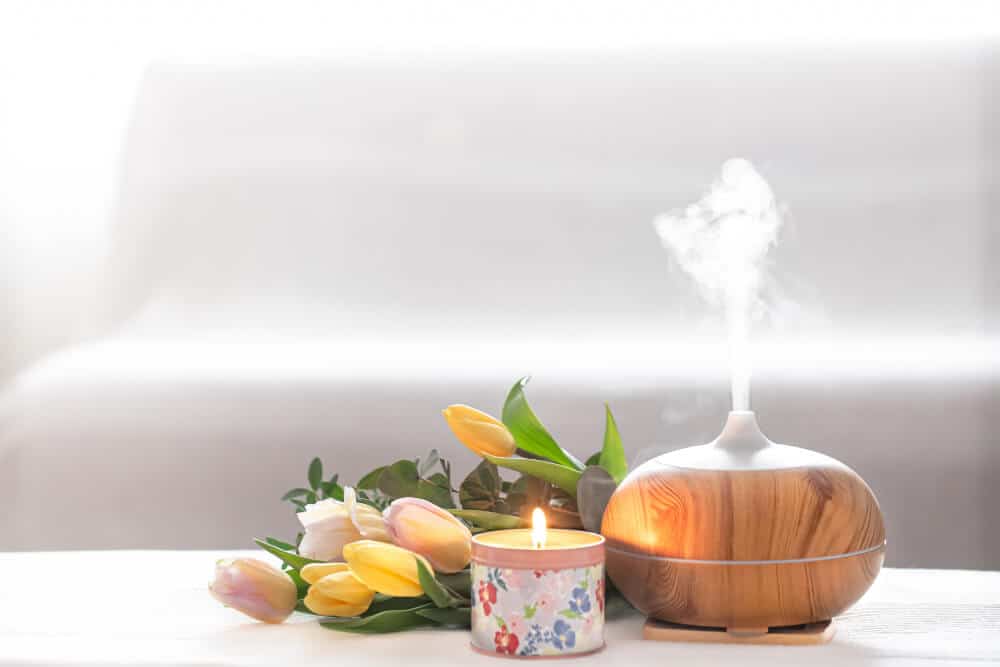
Vanilla aromatherapy candles are an easy way to bring a warm mood into a room and gather a little calm at the end of the day. You can place them in your favorite place to relax and enjoy the quiet: a bathroom, a bedroom, a reading corner, or a sofa on the terrace. Diffusers work well in the master bedroom, living room, family room, or a small meditation space. Some people even keep a diffuser on their work desk so the workspace feels less like an office and more like a pleasant corner of home.
When you meditate, a gentle vanilla scent can help mark the start of the session and give your attention something soft to rest on. In the bathroom, a candle or a vanilla-scented bath product makes a quick shower feel more like self-care. In the bedroom, a diffuser that runs for an hour before sleep can become part of a wind-down routine that tells your body the day is over. The scent does not have to be strong to work. In fact, a light, barely noticeable aroma usually feels more relaxing than a heavy one.
One of the vanilla types that gives a soft, sweet, and slightly woody touch to a room is Tahitian vanilla. Its floral, fruity aroma is so pronounced that you can often smell a Tahitian vanilla candle even before you light it. Perfumers call this the “cold throw” of a candle. Planifolia vanilla, by contrast, tends to smell deeper and creamier, and its aroma usually opens up more fully when warmed. Both are lovely, so the choice comes down to personal preference. To learn more about the Tahitian variety, see our guide to the Tahitian vanilla bean supplier.
The Truth About “Vanilla Essential Oil”
The inside of a vanilla pod contains tiny seeds surrounded by an oily, aromatic resin. That resin carries the distinctive vanilla scent, along with vanillin and many other aromatic compounds. Here is something many buyers do not realize, though. Vanilla is not easily steam distilled the way lavender or eucalyptus is, so a true vanilla “essential oil” in the strict sense is rare. Most vanilla aromatherapy products are actually one of the following:
- Vanilla absolute, extracted with solvents, very concentrated and usually expensive.
- Vanilla CO2 extract, made with pressurized carbon dioxide, also concentrated and natural.
- Vanilla oleoresin, a thick, dark extract often used in perfumery and flavor work.
- Vanilla-infused carrier oil, where vanilla beans are steeped in an oil like jojoba or sweet almond.
- Vanilla fragrance oil, which may be synthetic or partly synthetic, mainly built around vanillin.
None of these is “wrong,” but they are not the same product, and the price should reflect that. A tiny bottle labeled “vanilla essential oil” at a very low price is almost certainly a fragrance oil or a diluted infusion. Read the label, look for the botanical name Vanilla planifolia or Vanilla tahitensis, and ask the seller how the oil was made. Honest sellers will tell you.
How to Use a Vanilla Diffuser Well
You should buy vanilla aromatherapy oils from a trusted maker. For most ultrasonic diffusers, a few drops are enough, though the right amount depends on the size of the water tank and the strength of the oil, so follow the manufacturer’s instructions. Two or three drops in a small diffuser can create a pleasant aroma that lingers for an hour or two. More is not better here. An overly strong scent can cause headaches and spoil the relaxing effect you were hoping for. The quality of the beans matters here too, which is why it helps to read about knowing your Indonesia vanilla bean supplier before you buy in larger amounts.
Many diffusers have intermittent settings that release mist in short bursts with pauses in between. This gentle rhythm keeps the aroma soft and makes the oil last longer. Some models run through the night while you sleep, but it is a good idea to give the room some unscented air too, especially if you share the space with children, older relatives, or pets. Cats and some other animals are sensitive to concentrated aromatic oils, so keep diffusers out of small, closed rooms where pets cannot leave.
If you apply vanilla oil to your skin, always dilute it in a carrier oil first and do a small patch test on the inside of your wrist. Vanilla is generally gentle, but any aromatic product can irritate sensitive skin. People with known fragrance allergies should be especially careful. Never swallow aromatherapy oils, even ones made from food plants.
A Simple Evening Wind-Down Routine with Vanilla
Aromatherapy tends to work best when it is part of a routine rather than a one-off. Your brain learns to connect a particular scent with a particular state of mind, so using the same vanilla aroma at the same time each evening can gradually make it a signal for rest. Here is a simple routine you can adapt to your own schedule.
- About an hour before bed: Switch on a diffuser with a few drops of vanilla oil in the bedroom, or light a vanilla candle in the living room. Dim the main lights if you can.
- Put the phone away: Choose a fixed time to stop checking messages. The calm scent works much better without a stream of notifications competing for your attention.
- Take a warm shower or bath: Use a vanilla-scented soap or body wash so the aroma follows you through the routine.
- Moisturize: Apply a lightly scented vanilla body lotion or a vanilla-infused body oil while your skin is still slightly damp.
- Read, stretch, or breathe: Spend ten minutes on something quiet. Slow breathing, in for four counts and out for six, pairs naturally with a soft scent.
- Before sleeping: Switch off the diffuser and always blow out any candles. A light trace of vanilla in the room is enough.
Give the routine at least a couple of weeks before deciding whether it helps. Many people notice that the familiar scent makes it easier to switch off, simply because their mind has learned what comes next. If you still struggle with sleep after building good habits, it is worth speaking with a doctor.
How to Choose Quality Vanilla Aromatherapy Products
Good products are honest about what they contain. Look for a clear ingredient list that names the vanilla source, such as vanilla absolute, vanilla CO2 extract, or vanilla-infused oil with the botanical name. Check whether the product is meant for diffusing, for skin, or for candles, because these uses have different safety requirements. A skin oil should already be diluted in a carrier oil, while a diffuser oil may be much more concentrated.
Price is a useful clue. Natural vanilla extracts are expensive to produce, so a very cheap “pure vanilla oil” is unlikely to be what it claims. Buying from brands that answer questions openly, publish safety information, and list a contact address is always safer than buying anonymous products online.
Vanilla Aromatherapy Beyond the Diffuser
To beat the laziness that often arrives after a tiring day, try small changes rather than big ones. Replacing your usual soap with a vanilla-scented bar, for example, can make bath time something to look forward to instead of something to skip. The scent gives the routine a pleasant start, and the warm water does the rest. You may find you no longer miss bath time even on nights when you feel exhausted.
Vanilla-scented body oils, lotions, and room sprays are other easy options. You can also make your own simple products at home with real vanilla beans. Steeping a split vanilla pod in a bottle of jojoba or sweet almond oil for a few weeks gives you a gentle, naturally scented body oil. Our article on the uses of vanilla bean pods explains this and several other homemade ideas, and our guide to vanilla bean crafts includes candles and sachets you can make yourself.
If you enjoy making your own aromatherapy products, start with good beans. Fresh, plump vanilla pods release far more aroma than old, dry ones. Origin Harvest supplies planifolia and Tahitian vanilla beans from Indonesia and Papua New Guinea that are well suited for infusions, candles, and other homemade scented products.
Frequently Asked Questions
Does vanilla aromatherapy really reduce stress?
Many people find the scent of vanilla relaxing, and some small studies suggest pleasant scents can help people feel calmer. The overall research on aromatherapy is still limited and mixed, so it is best seen as a comfort and a pleasant habit rather than a treatment. If stress, anxiety, or sleep problems are affecting your daily life, talk to a health professional.
Is vanilla essential oil the same as vanilla extract?
No. Vanilla extract is a food ingredient made with alcohol and water, meant for cooking. Aromatherapy products labeled as vanilla oil are usually absolutes, CO2 extracts, oleoresins, infused oils, or fragrance oils. They are not interchangeable, and aromatherapy oils should never be used in food.
Is it safe to run a vanilla diffuser all night?
Many diffusers are designed with timers and automatic shut-off, but continuous use is not necessary to enjoy the scent. Running a diffuser for an hour or so before bed is usually enough. Keep the room ventilated, follow the manufacturer’s instructions, and take extra care if pets, babies, or people with asthma share the room.
Reviewed and updated by the Origin Harvest Editorial Team on November 16, 2026. We removed health claims that are not supported by evidence and added clear information on how vanilla aromatherapy oils are made and used safely.