
The market for vanilla beans in the UK is remarkable because of its strong appetite for high-quality, natural ingredients. British bakers, chocolatiers, ice cream makers, and home cooks all rely on vanilla, and many of them have become more particular about where it comes from. This market is part of a broader European picture that reflects the preferences of consumers across the continent: natural flavors, clean labels, and traceable sourcing. Understanding that picture helps both buyers and suppliers make better decisions.
Europe as a whole is one of the most important regions for vanilla beans and vanilla derivatives. The single largest importer in the world is the United States, but European countries together import large volumes, led by France, Germany, and the Netherlands. According to the CBI study on the European vanilla market, almost 1,800 new food and drink products containing vanilla are launched in Europe every year, and the UK ranks among the top three countries for these launches alongside Germany and France. That steady stream of new products is one reason demand continues to grow, creating real opportunities for producers outside Europe who can supply consistent quality.
Where the UK’s Vanilla Comes From
Vanilla does not grow in the British climate, so every vanilla bean sold in the UK is imported. Historically, Europe’s connection to vanilla came through colonial trade. France planted vanilla on the tropical island of Bourbon, now called Reunion, in the Indian Ocean east of Madagascar. The plants grew well but would not produce pods, because the Mexican insects that pollinate vanilla in its native habitat did not exist there. That problem was solved in 1841 when a young man on Reunion named Edmond Albius developed a quick hand-pollination technique, which opened the door to vanilla farming across the region.
Today, Madagascar supplies most of the world’s natural vanilla, and vanilla grown on the Indian Ocean islands is still known as “Bourbon” vanilla after Reunion’s old name. Indonesia is the second largest producer, and Papua New Guinea, Uganda, and Mexico supply smaller amounts. If you would like the full story of how vanilla traveled from Mexico to the rest of the world, read our article on vanilla bean history.
Vanilla products in the UK include whole Bourbon beans, gourmet beans, Tahitian beans, vanilla extract, vanilla bean paste, and vanilla powder. Supermarkets usually stock pods and extract, while specialist food shops and online sellers offer a wider range of origins and grades.
The Prices of Vanilla Bean in the UK
The retail price of vanilla beans in the UK varies depending on packaging, quality, origin, and whether the product is organic or Fairtrade certified. Standard vanilla pods sold in simple packs can cost from around £1.50 per pod, while organic or premium pods sold in glass jars or tubes can reach roughly £5 to £6 per pod. Prices change regularly, so it is always worth comparing a few retailers before buying in quantity.
These prices move with global vanilla supply. Climate events and production challenges in Madagascar, such as cyclones and poor harvests, have pushed vanilla prices up sharply in some years, and those increases eventually reach UK shelves. When harvests recover, prices tend to ease, but there is usually a delay. For a deeper look at the forces behind these movements, see our article on what affects vanilla bean wholesale price.
For businesses, buying wholesale from a producing country can be far more economical than buying retail packs. A bakery or ice cream maker using vanilla every week will quickly notice the difference between paying per pod and paying per kilogram. Wholesale buyers also gain more control over grade and origin, which is important when a product’s flavor needs to stay consistent.
Vanilla Bean in the UK for Extract
One of the most popular uses of vanilla beans in the UK is to add flavor and aroma to baked goods, cakes, ice cream, cookies, crème brûlée, cocktails, craft beer, pastries, and many other dishes. A growing number of home cooks also make their own vanilla extract, which is simple, satisfying, and often cheaper than buying high-quality extract in small bottles.
The number of vanilla beans you use largely determines the strength of the extract you make. The more beans you use, the stronger the result. A typical homemade extract consists of vanilla beans soaked in an alcohol of at least 35 percent ABV, such as vodka or rum, or in vegetable glycerin for an alcohol-free version. Some recipes add a little water or sugar, but many enthusiasts prefer not to, because they want the purest possible vanilla flavor.
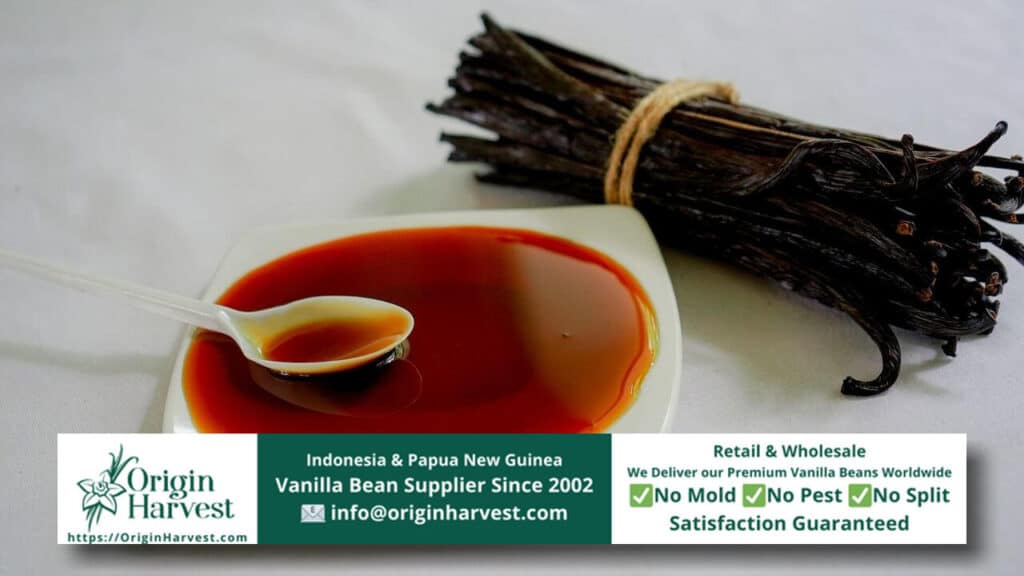
During the maceration process, the beans steep in the alcohol or glycerin inside a glass jar with an airtight lid for at least eight weeks, and often several months. Shake the jar every week or so. The finished extract is a clear amber to dark brown liquid with a rich, inviting aroma. This natural extract is very different from cheap “vanilla essence,” a term often used in the UK for flavorings based on synthetic vanillin.
Beyond home cooks, the UK vanilla trade includes flavor companies, specialist importers, and online retailers who supply pure vanilla products to consumers and to small and medium food businesses. Many chefs prefer real vanilla because it adds depth and complexity that synthetic flavorings cannot match. If supplies of beans or extract are tight, UK buyers can also source directly from Asian suppliers such as Origin Harvest in Indonesia, the world’s second largest vanilla producer.
Can You Get Drunk from Vanilla Extract?
It is a fair question. Pure vanilla extract typically contains around 35 percent alcohol, which is similar to many spirits. If someone were to drink it straight in large amounts, it could indeed cause intoxication. In normal cooking, however, extract is used by the teaspoon, so the amount of alcohol in a serving of food is very small.
When you bake, simmer, or roast, part of that alcohol evaporates, although not necessarily all of it. In a cake, a sauce, or a warm soup, the remaining amount per portion is tiny, so the chance of feeling any effect is practically zero. In uncooked recipes, such as whipped cream or a no-bake cheesecake, the alcohol remains but is still present only in a very small quantity.
If you prefer to avoid alcohol completely, you can use or make an alcohol-free vanilla extract. These are usually made with food-grade vegetable glycerin, a plant-derived liquid that draws out vanilla flavor gently and gives a slightly sweet, thicker extract. Whichever type you use, store alcohol-based extract out of reach of children, just as you would any other bottle containing alcohol.
Vanilla Bean Grades in the UK for Culinary Use
Grade A and Grade B are the two main vanilla bean grades used in the trade. Grade A is often called gourmet grade, while Grade B is known as extract grade. The difference is based mainly on moisture content and appearance, which in turn determines how chefs use each one.
| Grade | Moisture and Appearance | Best Culinary Use |
|---|---|---|
| Grade A (Gourmet) | Higher moisture, around 25 to 35%; plump, oily, flexible | Scraping seeds into custards, ice cream, crème brûlée, desserts where vanilla is the star |
| Grade B (Extract) | Lower moisture, often around 15 to 25%; drier, less flexible, sometimes split | Making extract, infusing sauces, grinding into powder |
Dishes that highlight a pure vanilla taste usually call for Grade A beans. Their higher moisture content makes them easy to split and scrape, and their seeds release flavor quickly and deeply into creams and custards. They also look beautiful on a plate, which matters in restaurant presentation.
Grade B beans are drier and less attractive to the eye, but they are excellent value for extraction. Their concentrated flavor dissolves well into alcohol or glycerin, and they can be ground into powder more easily than plump gourmet beans. Many professional kitchens keep both grades: gourmet beans for desserts that showcase vanilla, and extract-grade beans for making their own extract and vanilla sugar.
Whichever grade you buy, storage in the British climate deserves some thought. Keep beans in an airtight glass jar in a cool, dark cupboard, away from the oven and radiators, and avoid the refrigerator, where condensation can encourage mold. Check them every few weeks. White, sparkly crystals on the surface are vanillin and a sign of quality, while dull, fuzzy patches with a musty smell are mold. Our guide on how to store vanilla beans properly explains the difference in more detail.
Classic British Bakes That Rely on Vanilla
Vanilla is quietly essential to many of Britain’s best-loved puddings and bakes. In most of them, it does not shout, but you would notice immediately if it were missing. Using real vanilla in these recipes is one of the easiest ways for a home baker or café to lift familiar favorites.
Victoria sponge. The classic sandwich cake of butter, sugar, eggs, and self-raising flour, filled with jam and cream, depends on vanilla to give the sponge its warm, rounded flavor. A teaspoon of good extract or the seeds of half a bean in the batter, plus a little vanilla in the whipped cream, makes a noticeable difference.
Proper custard. Real custard made with milk, cream, egg yolks, and sugar is traditionally infused with a vanilla pod. It is the perfect partner for crumbles, sponge puddings, and apple pie, and it tastes completely different from custard made with powder.
Trifle. Layers of sponge, fruit, custard, and cream make vanilla the backbone of this festive dessert. Vanilla bean paste in both the custard and the cream gives beautiful specks through every layer.
Shortbread and biscuits. Although Scottish shortbread is traditionally just butter, sugar, and flour, many bakers add a little vanilla for depth. Vanilla is also central to custard creams and many other biscuits.
Ice cream and Eton mess. Vanilla ice cream, meringue, cream, and strawberries come together in Eton mess, a summer favorite. Real vanilla in the cream makes the simplest dessert taste luxurious.
For more dessert ideas built around real vanilla, see our collection of vanilla bean desserts.
Ordering Vanilla Beans for the UK from Origin Harvest
Origin Harvest, based in Banten, Indonesia, offers a range of vanilla grades and forms for buyers in the UK, including luxury grade, gourmet grade, extract grade, whole beans, and vanilla powder, in both planifolia and Tahitian varieties. We have been supplying vanilla since 2002, working with Indonesian farmers to supply more than 20 tons for local needs and more than 10 tons to international buyers. Every order is protected with plastic wrapping and sturdy boxes for safe delivery to homes and businesses in the UK. You can learn more about our Indonesian beans in our guide to the planifolia vanilla bean supplier in Indonesia.
Frequently Asked Questions
Is vanilla grown in the UK?
No. Vanilla needs a warm, humid tropical climate and cannot be grown commercially in the UK. All vanilla beans sold in Britain are imported, mainly from Madagascar and Indonesia, with smaller amounts from other tropical countries.
What is the difference between vanilla extract and vanilla essence in the UK?
Vanilla extract is made by soaking real vanilla beans in alcohol or glycerin. Vanilla essence is a term often used for cheaper flavorings based on synthetic vanillin. Check the ingredient list: real extract lists vanilla beans or vanilla extract, while essence usually lists flavorings.
Which vanilla grade should a UK bakery buy?
It depends on the product. Grade A gourmet beans suit desserts where visible seeds and strong vanilla flavor matter. Grade B extract beans are more economical for making extract or vanilla sugar. Many bakeries use both.
Can I import vanilla beans from Indonesia to the UK?
Yes. Vanilla beans are regularly shipped from Indonesia to the UK. Your supplier should provide commercial documents and a phytosanitary certificate, while you or your customs broker handle import clearance and any duties. Check current UK import requirements before your first order.
Reviewed and updated by the Origin Harvest Editorial Team on November 19, 2026. We corrected the history of Bourbon vanilla, clarified Europe’s position in the global vanilla trade, fixed the description of vanilla grades, and replaced inaccurate details about alcohol-free extract.